Ford’s Rebuilt Canadian Plant Beat Its Own Super Duty Deadline
Ford's Oakville plant in Ontario is now sending finished Super Duty trucks to dealers, two weeks ahead of the date the company had set for its first shipments.
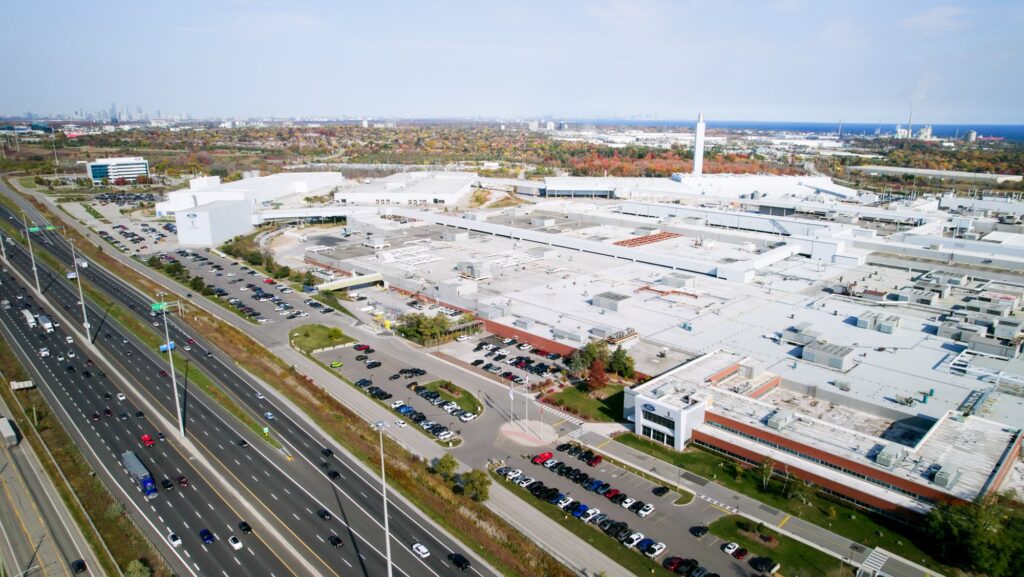
Ford’s Oakville plant in Ontario is now sending finished Super Duty trucks to dealers, two weeks ahead of the date the company had set for its first shipments.
The plant joins Ford’s two American heavy-duty truck factories in Kentucky and Ohio, which gives the Super Duty a third home after a rebuild that Ford says cost nearly C$5 billion. Ford says the Canadian-built trucks are matching Kentucky’s quality, and it expects the added output to mean more configurations available to order and less time waiting for a truck to be built.
Ford of Canada confirmed the start of shipments on November 20. In less than two years the company redid the body shop, the paint shop and final assembly and added a stamping operation, the first Ford has run in Canada. Trucks now move down a new flat-top line 1,000 feet long, where collaborative robots work beside the crew and AI-equipped cameras look for flaws as each one passes. The workforce numbers more than 2,000.

The Ontario line covers the full spread of Super Duty work, including the bare chassis cabs that body builders finish as ambulances and utility trucks. Every one of them uses the 7.3-liter Godzilla V8, which Ford builds at its engine plants in Windsor, Ontario. Ford’s case for the setup is flexibility: with engines made in Canada and trucks assembled in both countries, a changeover at one plant no longer has to starve fleets and upfitters of new trucks.
Bev Goodman, who leads Ford of Canada, called the project a sign of "confidence in Canadian manufacturing." Plant manager Kyle Cruji said the crew had to learn to build "a completely different vehicle," and that is literal: Oakville, which turned out its first car in 1953, had been due to build a three-row electric vehicle until Ford switched plans in 2024.
When it revealed the switch in July 2024, Ford put Oakville’s share of the work at $2.3 billion and said the plant could add up to 100,000 Super Duty trucks a year. It also said at the time that the Kentucky and Ohio plants were already flat out and that orders from Ford Pro customers outran what they could build.
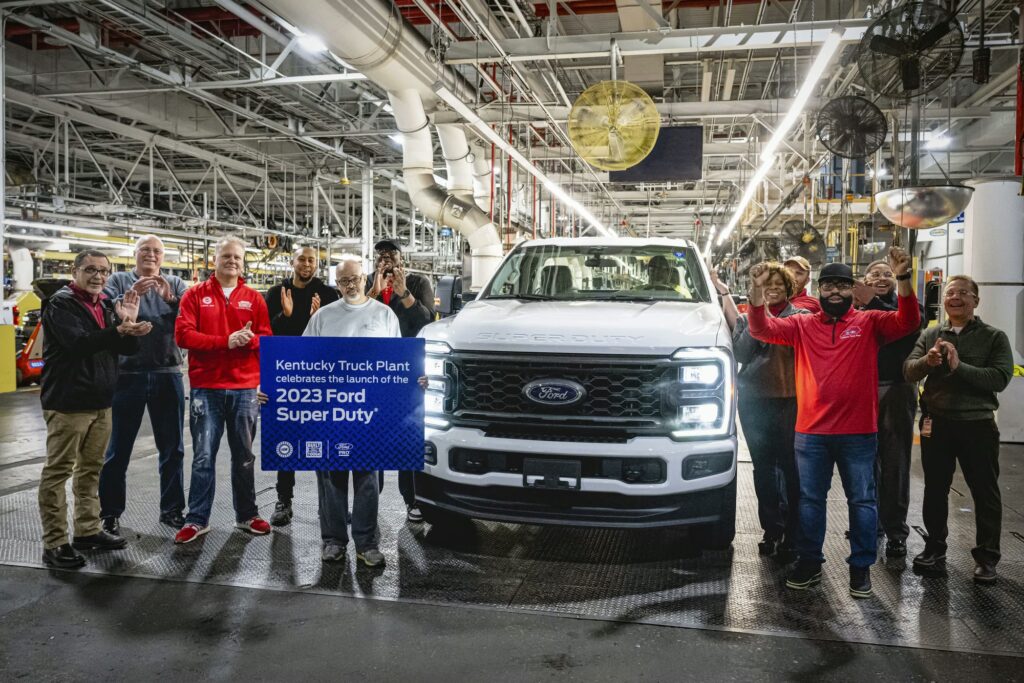
North of the border, Ford says the Super Duty accounts for close to one of every two heavy-duty pickups sold, and the F-Series is on course to finish a 61st year as Canada’s best-selling truck. South of it, the third plant matters most to buyers shopping a Super Duty against the Chevrolet Silverado HD or the Ram Heavy Duty, since the two US plants have had no spare room to build more.
The Ford Insider Take
Shipping early is the headline Ford wanted, but the real test is whether a third Super Duty line shortens order times at US dealers in the first half of 2027. If Oakville gets close to the 100,000 trucks a year Ford talked about, buyers who have waited months for a specific chassis cab or upfit should notice. The other question is trade: a Canadian-built Super Duty crossing into the US is exactly the kind of truck that tariff talk puts in the spotlight, and Ford’s pitch about one network spanning two countries reads as an argument aimed at Washington as much as at Ottawa.
More on the Super Duty
Related
Ottawa and Ontario Put Over C$750 Million Behind Ford’s Super Duty Plant
Canada's federal government is putting about C$464 million into Ford's rebuilt Oakville Assembly Complex, the Ontario plant that has just started shipping Super Duty pickups, and the province…

Costs Are Climbing, but Ford Says Its 2027 Profit Won’t Budge
Ford expects to earn about as much in 2027 as it will this year, even as steel, copper, chips and shipping all get pricier, because its finance chief…
Ford Patched the Godzilla V8’s Idle, and Now a Petition Wants a Recall
Federal safety regulators are weighing whether to open a full investigation into worn camshafts and lifters in Ford's 7.3-liter gasoline V8, the engine Ford calls Godzilla.