Only Three Companies Are Owed a Bigger Tariff Refund Than Ford
Ford has $1.3 billion coming back from Washington for tariffs the Supreme Court threw out, and among America's public companies only FedEx, Walmart and Apple have reported a larger claim.
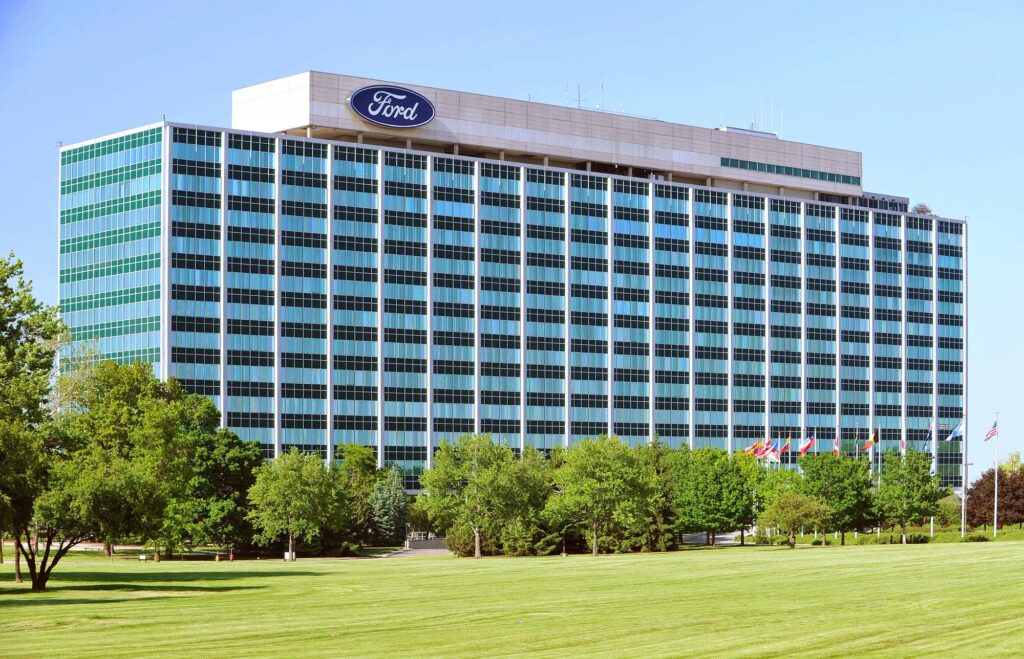
Ford has $1.3 billion coming back from Washington for tariffs the Supreme Court threw out, and among America’s public companies only FedEx, Walmart and Apple have reported a larger claim.
The money covers import duties Ford paid between March 2025 and February 2026 under the International Emergency Economic Powers Act, the 1977 law that the court ruled on February 20 gives a president no power to impose tariffs. Ford booked the full amount as a one-time benefit in its first-quarter results, and it has told investors that only about $500 million of it will arrive as cash during 2026.
Those figures sit in a database of tariff refunds that ProPublica published on November 19, built from what companies told the Securities and Exchange Commission and their own investors, with data gathered through October 7. It lists 343 public companies, and Ford is fourth behind FedEx at $3.3 billion, Walmart at $2.9 billion and Apple at $2.2 billion. General Motors is well down the list at $500 million, less than half of Ford’s figure.
Ford’s own record in the database quotes three of the company’s filings. The first, from April 29, described "a $1.3 billion one-time IEEPA tariff benefit reflecting amounts Ford paid between March 2025 and February 2026, primarily benefiting the Ford Blue and Ford Pro segments." On July 28, Ford lifted its adjusted free cash flow forecast for the year by $1 billion, to a range of $6.0 billion to $7.0 billion, and said roughly $500 million of the reimbursement was counted in it. A day later its quarterly report set the emergency-law refund inside a larger sum of about $3 billion in tariff reimbursements that Ford expected, as of June 30, from the federal government and from suppliers, part of it as offsets against what Ford owes those suppliers.
Ford’s parts makers appear in the same list with far smaller sums. Lear is recorded at $85 million, Goodyear at $60 million, Adient at $52 million and Dana at $26 million.
For US buyers, what matters is whether any of the money finds its way back to them, and so far nothing says it will. WLNS 6 News in Lansing, which reported on the Michigan companies in the database on November 28, said Ford faces a proposed class action in a Michigan federal court, brought on the argument that customers who paid tariff-related price increases should be repaid once Ford has its refund in hand. The station also pointed out that the ruling reaches only the emergency-law duties, which means the Section 232 tariffs on steel, aluminum, vehicles and auto parts still apply and still cost automakers money.
ProPublica’s reporting has identified at least nine companies that put refund money toward executive bonuses, and WLNS said Ford was not one of the companies named. Ford has not announced any price change or customer rebate tied to the refund.
The Ford Insider Take
A refund this size is the reward for being a big importer of parts, not a prize, and Ford was careful to call it a one-time item. Still, $1.3 billion is real money in a year when the company has been counting every recall and warranty dollar, and it flatters the 2026 numbers in a way 2027 will not repeat.
The class action is the part worth watching. Ford and every other automaker raised prices while these duties were in force, and it will be hard to argue in a courtroom, or a showroom, that the customer who paid more for a truck in 2025 has no claim on a refund for the very tariffs that were blamed for the increase. Section 232 duties have not gone anywhere, though, which gives Ford a ready answer for why sticker prices are staying put.
Related
The 2027 Bronco Sport Loses Its Free Gray and Gains a Green
Ford has replaced three of the Bronco Sport's nine paint colors for 2027, and the gray that used to cost nothing extra is one of the three that…
Ford Taught Oakville the Super Duty by Tearing Kentucky Trucks Apart
Ford's Oakville launch team learned the Super Duty by stripping finished trucks from Kentucky down to their parts, and it began the job in January with only 12…
Edsel Ford II’s Mustang Missed Its Reserve, Then Sold for $200,000
A Mustang convertible that Edsel B.