Ford Taught Oakville the Super Duty by Tearing Kentucky Trucks Apart
Ford's Oakville launch team learned the Super Duty by stripping finished trucks from Kentucky down to their parts, and it began the job in January with only 12 people.
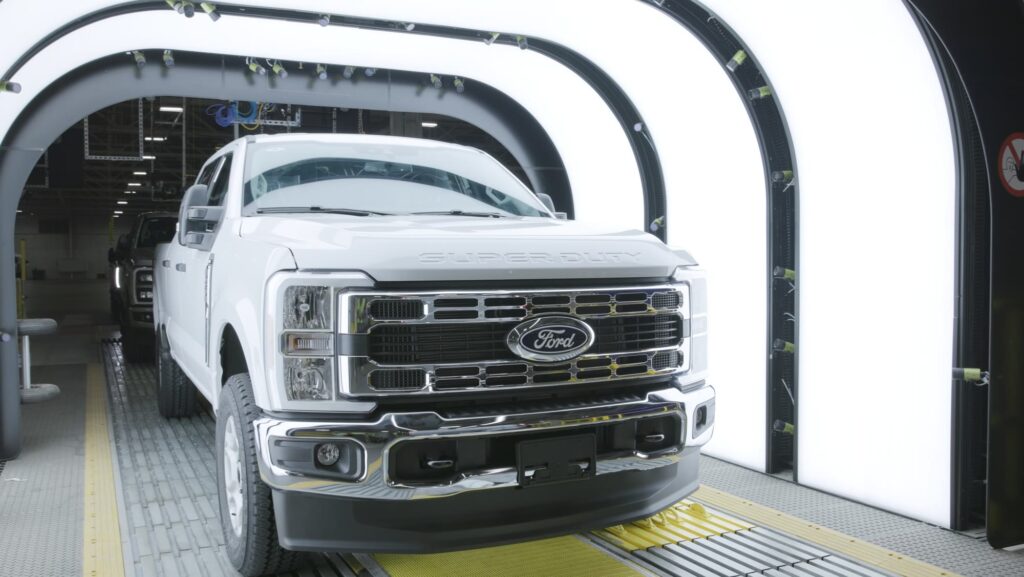
Ford’s Oakville launch team learned the Super Duty by stripping finished trucks from Kentucky down to their parts, and it began the job in January with only 12 people.
That small group grew into the workforce that now builds the heavy-duty pickup in Ontario, and the method it chose explains how a plant that was new to the Super Duty was cleared to ship them two weeks early. Each part that came off a Kentucky-built truck was logged by its part number and given a place on the new line, so the layout was drawn around the vehicle instead of the other way round.
Eric Stoetzel, the launch manager at Oakville Assembly Complex, described the process to Oakville News, which toured the rebuilt plant and published its account on November 28. He dated the start of the truck launch to January 5, 2026. "Every piece we took off," Stoetzel said. "We identified the part number, where it was going to go."
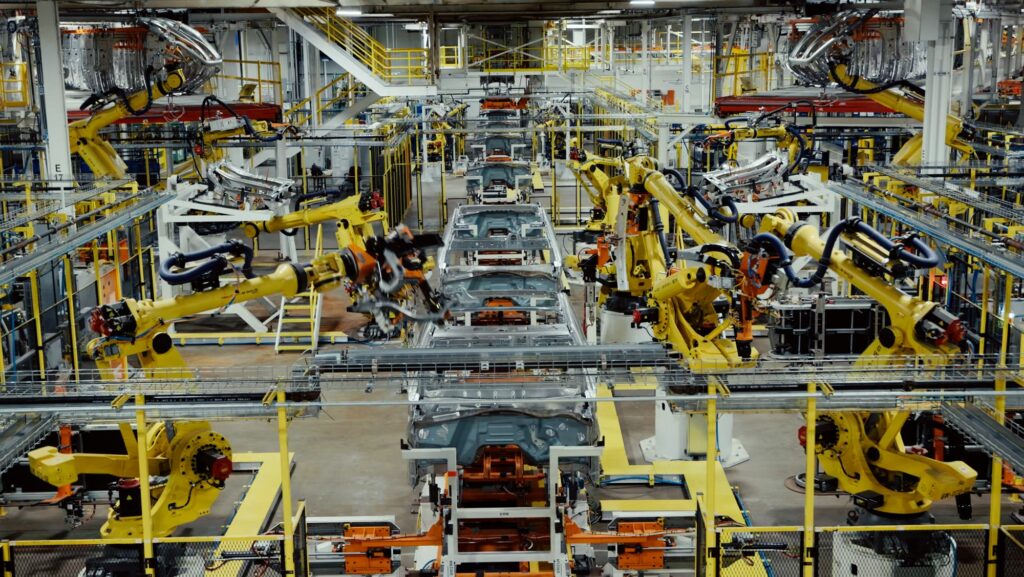
From that inventory the team settled where each component would sit beside the line and worked out a build sequence, then put up mock workstations to rehearse how an operator would carry out every task before the real equipment went in. The donor trucks came from Kentucky Truck Plant, one of the two American factories that already built the Super Duty.
The local outlet’s tour also took in a 3D-printing lab and two monitoring systems that it named as Invisible AI and SiteIQ cameras. According to Stoetzel, the plant uses computer analysis and AI-assisted video to spot where a station needs changing before it causes a quality fault or strains the person working there. Ford’s own account of the rebuild adds a flat-top assembly line 1,000 feet long, collaborative robots and cameras that check each truck as it moves through the plant.
Finishing early had a direct effect on the people involved, because it brought about 2,000 employees back to work sooner than planned. By Ford’s count the whole overhaul, which reached every stage from welding bodies to the end of the line, took less than two years.
For American buyers, the point of all this is a third source of trucks. Oakville now turns out Super Duty pickups and chassis cabs next to the Kentucky and Ohio factories, with the 7.3-liter V8 coming from Ford’s engine plants in Windsor, Ontario, and Ford says the Canadian trucks match the quality of the ones from Kentucky.
The Ford Insider Take
Taking apart a finished truck to learn how to build one sounds almost too simple, but it is the kind of unglamorous preparation that separates a clean launch from a year of recalls. A plant that comes in two weeks early with no drama is worth noticing, because a rushed launch is where expensive quality problems usually begin.
The real proof comes next year, when Oakville is running at volume and the first of these trucks have a winter behind them. If warranty claims on the Canadian-built Super Duty stay level with Kentucky’s, the 12 people who started with a wrench and a parts list will have earned more credit than the cameras.
Related
F-150 or Super Duty: The Heavy-Duty Truck Starts Below an F-150 XLT
The Ford F-150 and the Ford Super Duty overlap on price far more than most shoppers expect, because the cheapest Super Duty, an F-250 XL at $46,125, costs…
A Ford F-550 With a Shower, a Safe and Solar Panels Is at $100,000
Bidding has reached $100,000 on a 2016 Ford Super Duty F-550 that carries a small apartment on its back, with a kitchen, a bathroom, a hidden safe and…

Ford’s Rumored 8.0L Diesel Now Has a Name, and It’s a Cartoon Bird
An 8.0-liter Power Stroke turbo-diesel V8 is running in Super Duty test trucks, and the engine is said to go by the nickname "Roadrunner" inside Ford.