Ford Patents Mirrors That Tuck In Only for the Tight Part of a Parking Space
Ford has been granted a patent for a parking system that folds a side mirror just before it would clip the car in the next space, then swings it back out.
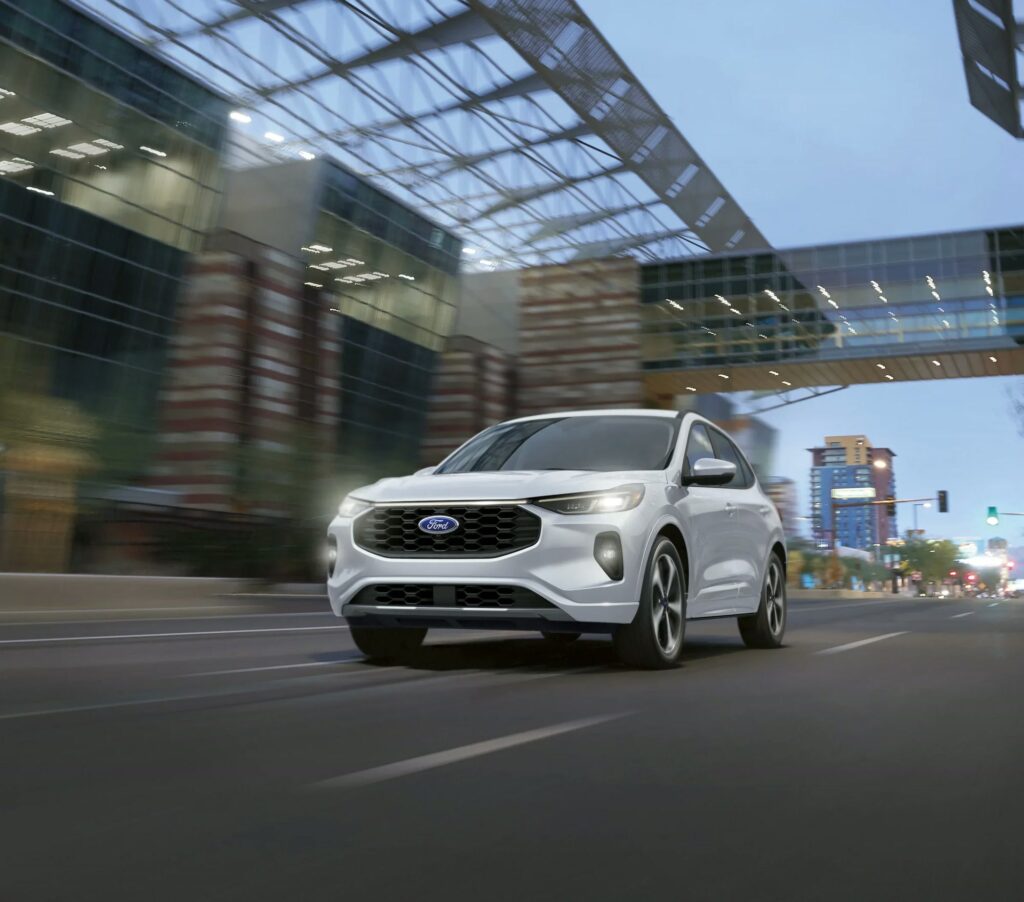
Ford has been granted a patent for a parking system that folds a side mirror just before it would clip the car in the next space, then swings it back out.
The point of folding late and unfolding early is that a modern mirror is more than a mirror. It usually houses one of the cameras that a parking assistant relies on, so a car that pins its mirrors back for the whole maneuver is partly blinding itself at the moment it most needs to see the painted lines and the cars on either side.
The patent is number 12,807,134.pn.&type=ids), issued to Ford Global Technologies on November 24, 2026, with 14 claims and four sheets of drawings. The work comes from Germany, where both named inventors, Marc Roeber and Florian Vieten, are based in or near Dusseldorf, and the US application of February 21, 2025 rests on a German filing made on March 25, 2024. Ford Authority reported the grant on Friday, and Ford has not confirmed the feature for any vehicle.
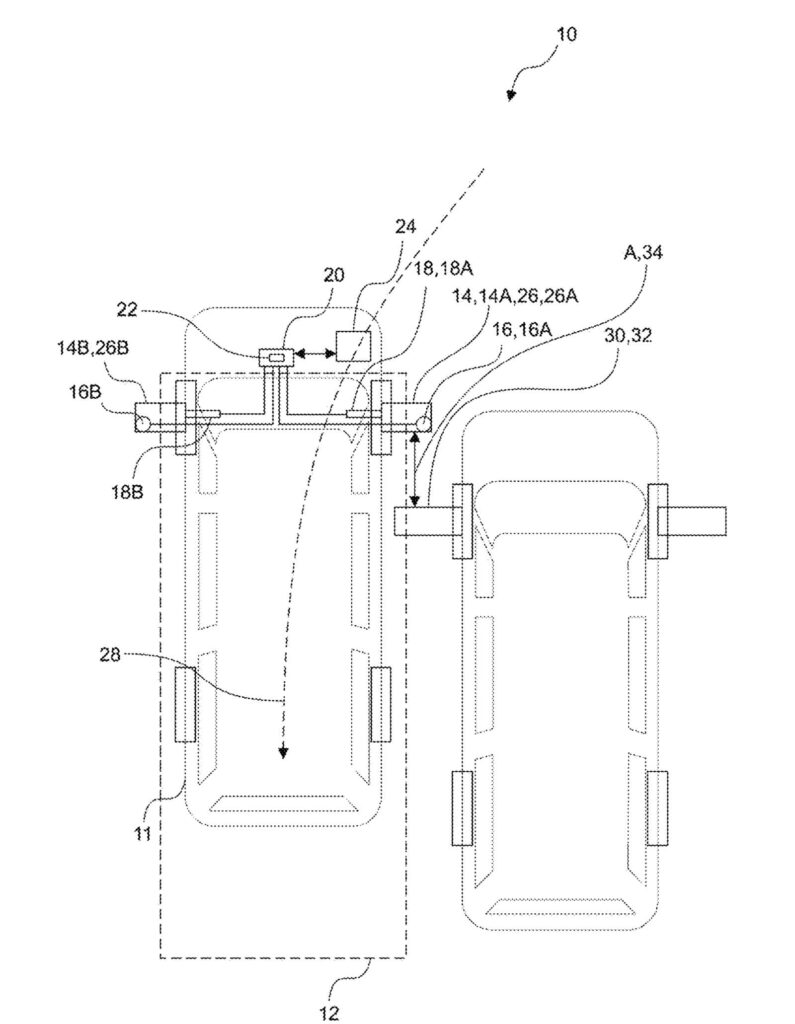
In the patent’s description, a control unit either plans the path into the space itself or takes it from the car’s parking assistant. Sensors, which may be cameras in the mirrors, radar or lidar, pick out whatever is intruding on the space, and the example Ford draws is the mirror of a neighboring car hanging over the line. The unit then works out how close its own mirror will come to that obstacle at each point along the path, before the car has reached any of them.
When the predicted gap drops under a set threshold, the unit signals the mirror’s motor to fold, and it does so only for the stretch of the path where the gap is too small. The system treats each mirror as a three-dimensional shape that changes as it pivots, and it allows for the time the folding takes, so that the fold can begin while the car is still rolling and finish just in time. Each mirror is judged separately, which means the left one can stay out while the right one tucks in.
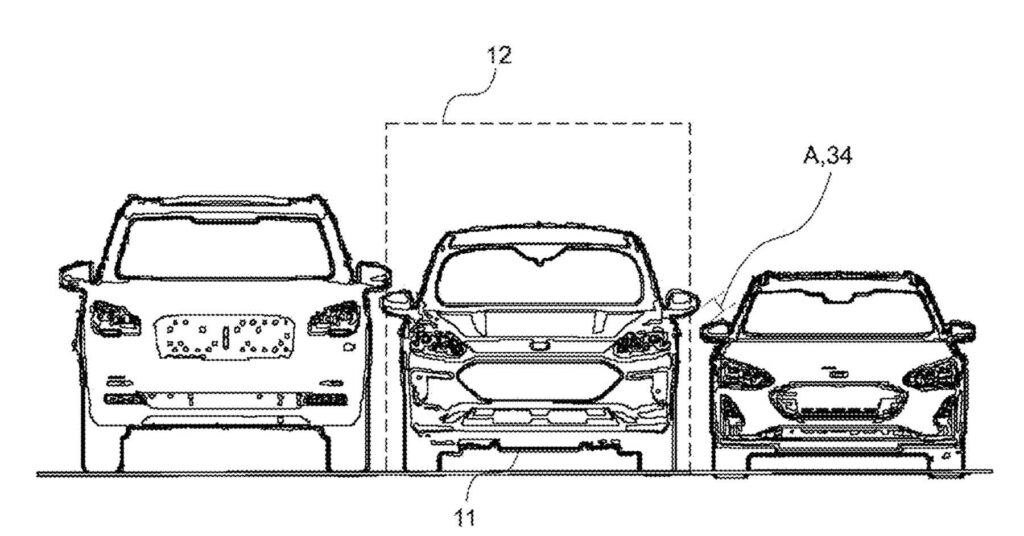
Two refinements go further. If the sensors show little or no traffic nearby, the car may pull up to the last point where the mirror can still fold freely, stop there, fold it and then continue, which shortens the folded stretch even more. There is also a second, smaller threshold for cases where folding will not be enough, and when the gap falls below that one the system tells the parking assistant to change course or halt the maneuver.
Ford argues in the document that earlier designs, including one German system it cites by number, fold the mirror whenever a distance rule is met and keep it folded whether or not the whole path calls for it. The patent says the method works for perpendicular, parallel and angled spaces, and for a driver parking by hand as well as for an automated system.
Ford has not said that the feature is headed for any model. A granted patent protects an idea and does not commit the company to building it, and nothing in this one names a vehicle or a date. ## The Ford Insider Take
This is a small idea of the useful kind. Anyone who has threaded a wide crossover into a narrow garage bay has folded a mirror by hand and then wished for it back a moment later, and a car that handles both halves of that without being asked would be an easy thing to like. It also says something about where the cost in a modern mirror sits, because the camera, the blind spot lamp and the heated glass inside one make a parking-lot scrape far more expensive than it used to be, and that gives Ford a practical reason to build this beyond the convenience.
Related
Only Three Companies Are Owed a Bigger Tariff Refund Than Ford
Ford has $1.3 billion coming back from Washington for tariffs the Supreme Court threw out, and among America's public companies only FedEx, Walmart and Apple have reported a…
The 2027 Bronco Sport Loses Its Free Gray and Gains a Green
Ford has replaced three of the Bronco Sport's nine paint colors for 2027, and the gray that used to cost nothing extra is one of the three that…
Ford Taught Oakville the Super Duty by Tearing Kentucky Trucks Apart
Ford's Oakville launch team learned the Super Duty by stripping finished trucks from Kentucky down to their parts, and it began the job in January with only 12…