Brazil Gets the Electrified Bronco America Can’t Buy
Ford will put a range-extended Bronco on sale in Brazil in the second half of 2027, the first electrified version of the Bronco and a model that is not sold in the United States.
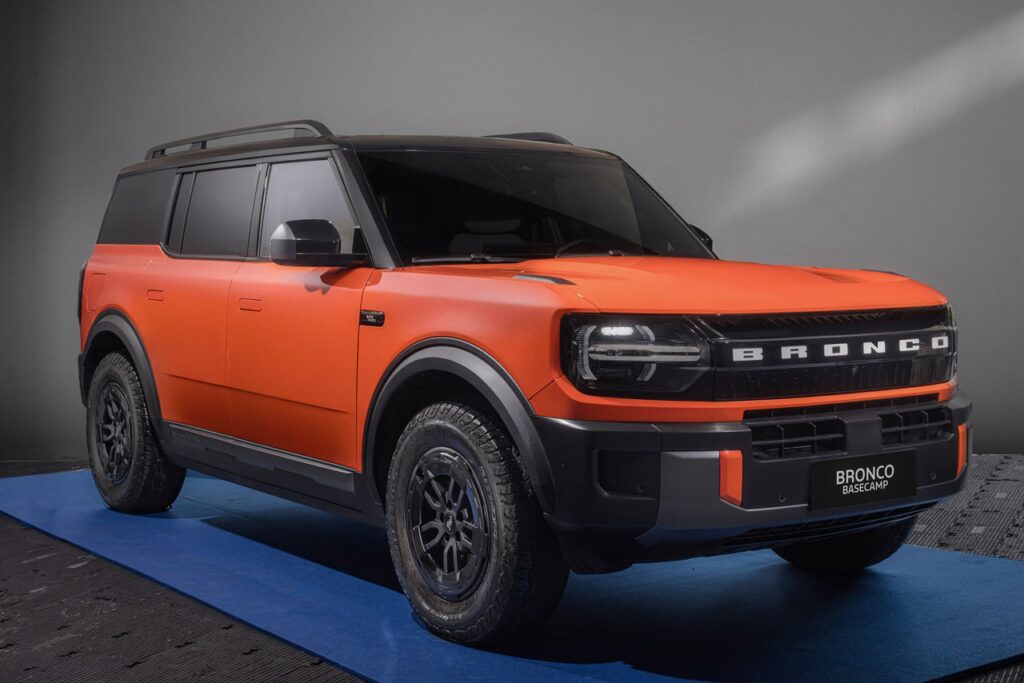
Ford will put a range-extended Bronco on sale in Brazil in the second half of 2027, the first electrified version of the Bronco and a model that is not sold in the United States.
The model is the Bronco Basecamp, which pairs electric drive with a gasoline engine that serves as a generator, and Ford quotes more than 400 metric horsepower and up to 1,200 kilometers of range, about 746 miles. It arrives as the headline of a 2027 plan that also adds four versions of the Territory crossover, two new Rangers and the F-150 Raptor to Ford’s Brazilian showrooms.
Ford laid out the plan in a release from its Brazilian newsroom dated Nov. 26, after a year-end meeting where its South American executives reviewed 2026. The company calls the Basecamp an "ultra-hybrid" in Brazil, its local name for an extended-range electric vehicle, and describes it as the first electrified version of the Bronco. The Basecamp is built in China, where it made its debut, and Ford has announced no plan to sell it in the US.
Brazilian outlet UOL Carros, which attended the event, reported that the Basecamp is due in the fourth quarter of 2027 and measures about 5.02 meters long, or roughly 198 inches. It also reported a 15.6-inch center screen, a LiDAR sensor above the windshield, a power-lifting roof on some versions, room inside for an inflatable mattress and an exterior outlet that supplies up to 6.6 kilowatts through Pro Power.
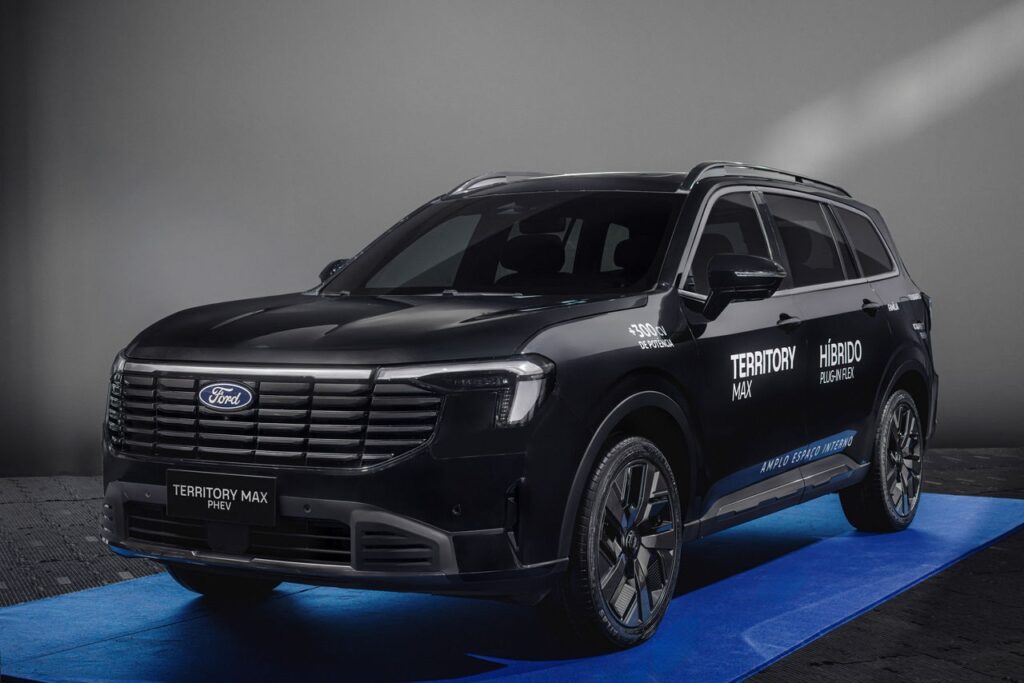
Four Territories Where There Was One
The Territory, a compact crossover that Ford does not sell in the US, grows from a single model into a family. A gasoline Territory Platinum with a richer trim arrives early in 2027. The Territory Plug-In Hybrid Flex follows in the second quarter with more than 300 metric horsepower combined and 1,100 kilometers of range, about 684 miles from a flex-fuel engine. A conventional flex hybrid and the Territory Max, a seven-seat plug-in flex hybrid, come at the end of the year.
"The Territory has only one model today and it is already a success," said Marcel Bueno, Ford’s marketing director for South America. "Now it will offer a complete family to compete much more strongly and grow within the segment."
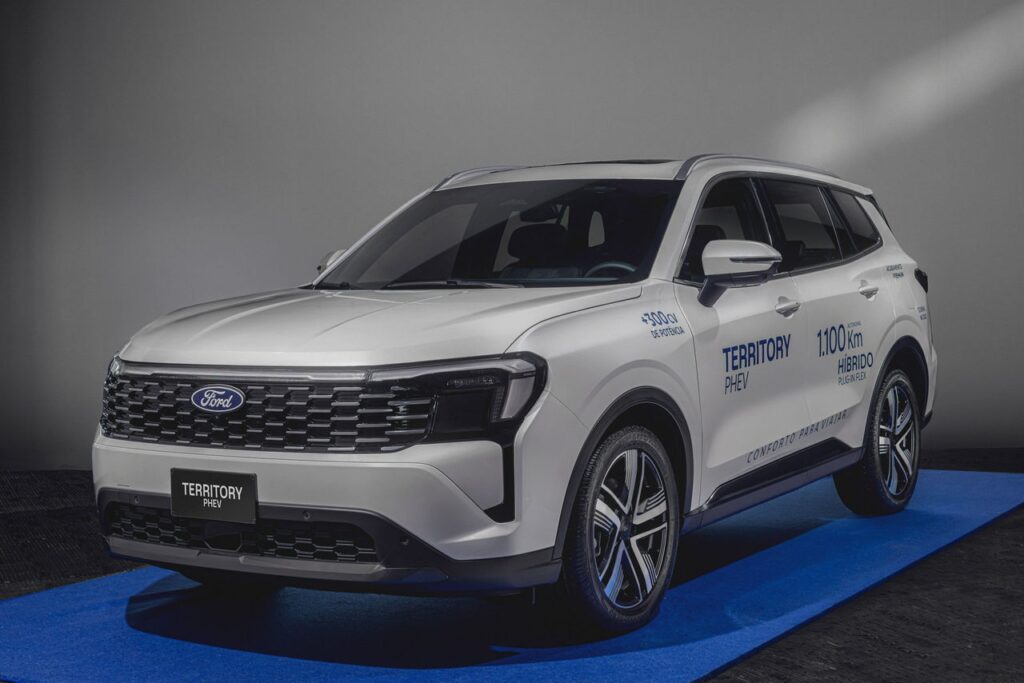
The sales figures explain the investment. Ford said Territory sales across South America rose more than 54 percent this year to 45,000 units, and in Brazil alone the model grew 14 percent to more than 7,600.
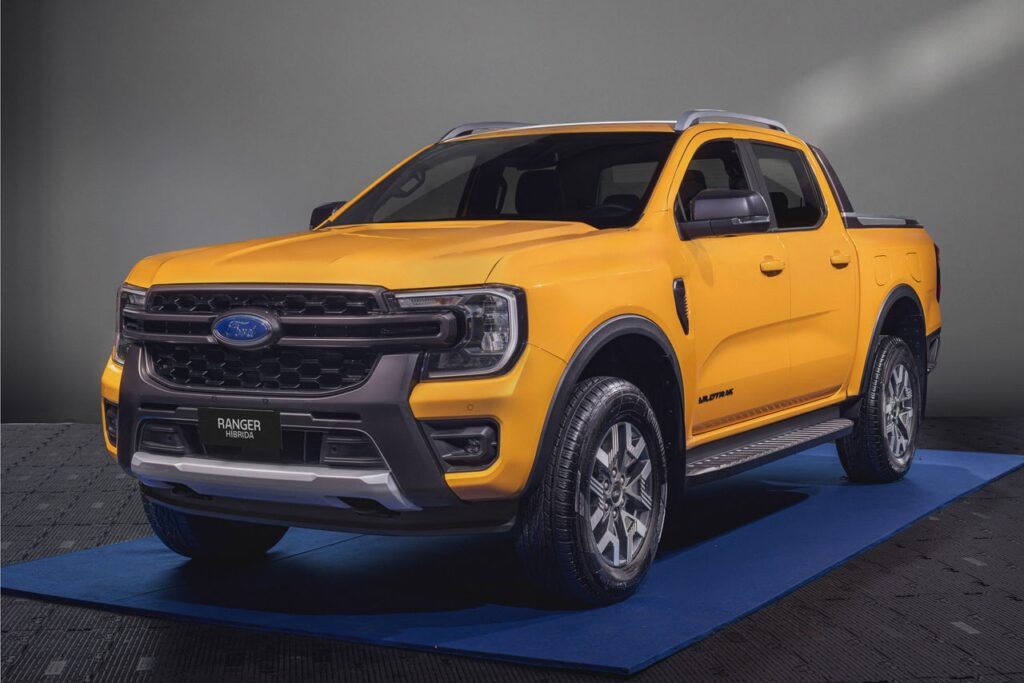
The F-150 Raptor opens for pre-sale in Brazil in April with a V6 of more than 400 metric horsepower. Two Rangers follow in the second quarter. The Ranger Tremor introduces a flex-fuel engine that Ford developed locally, rated at more than 270 metric horsepower and good for a run from rest to 100 km/h in about seven seconds. The Ranger Plug-In Hybrid, the first electrified Ranger in the region, uses the same new engine and makes more than 350 metric horsepower.
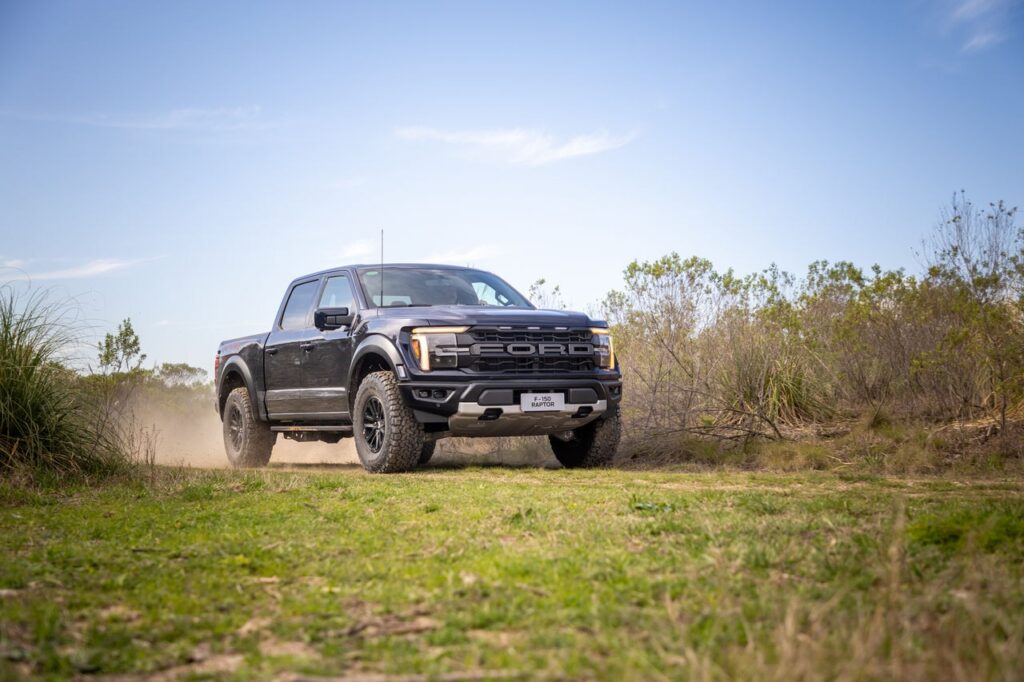
Ford said its South American sales rose 9 percent through October and should finish the year near 145,000 vehicles. The Ranger is on course for 70,000 to 75,000 of those, and the F-150 grew 8 percent to 5,900. In Brazil, where Ford’s sales are up 5 percent through October, the Ranger accounted for about 30,000 sales and a 24 percent share of midsize pickups, leading that segment in July and September. The Maverick Hybrid more than tripled its Brazilian sales to over 1,500 registrations, which Ford said makes it the country’s best-selling electrified pickup.
"We remain focused on our plan, bringing new products in every segment where we compete," said Martín Galdeano, president of Ford South America, who added that customers would have a choice of diesel, gasoline, flex-fuel, hybrid and electric power. He also said Ford will soon open a new building at its development and technology center in Camaçari, Bahia, with room for more than 1,000 engineers and technicians.
The Ford Insider Take
The Basecamp keeps collecting markets. It started in China, was confirmed for Australia and New Zealand, and now has a date for Brazil, and each new stop makes its absence from the US a little more conspicuous. A Bronco that can cover 746 miles between stops and run a campsite from its own battery is the kind of electrified truck American buyers have been asking for, and for now Ford is offering it everywhere but home.
The rest of the list is the more practical lesson. Brazil is getting flex-fuel plug-in hybrids across a crossover line and a midsize pickup in the space of one year, built around a flex-fuel engine that Ford developed locally. Ford tends to build what a market rewards, and South America is rewarding it with growth while it waits to see what the US will pay for.
More on the F-150
Related
A 13-Year-Old Raptor That Has Barely Left the Driveway Is Up for Auction
A first-generation Ford Raptor that has covered only about 8,000 miles since 2013 has come up for auction in California, where bidding stood at $25,000 on Saturday with…
A Former Officer With PTSD Found Quiet at the Wheel of a Raptor R
A former police officer who lives with post-traumatic stress disorder says a road trip to the Arizona desert in a Ford F-150 Raptor R gave him a mental…
The 2027 F-150 Hybrid Just Gave Back Two MPG
The four-wheel-drive 2027 Ford F-150 PowerBoost hybrid is rated at 21 mpg combined, two less than the 2026 truck, and most other 2027 F-150s have slipped too.