The Judge Who Sank the F-150 10-Speed Class Action Didn’t Clear the Gearbox
Ford has fended off an attempt to turn complaints about the F-150's 10-speed automatic into a class action covering more than 200,000 pickups.
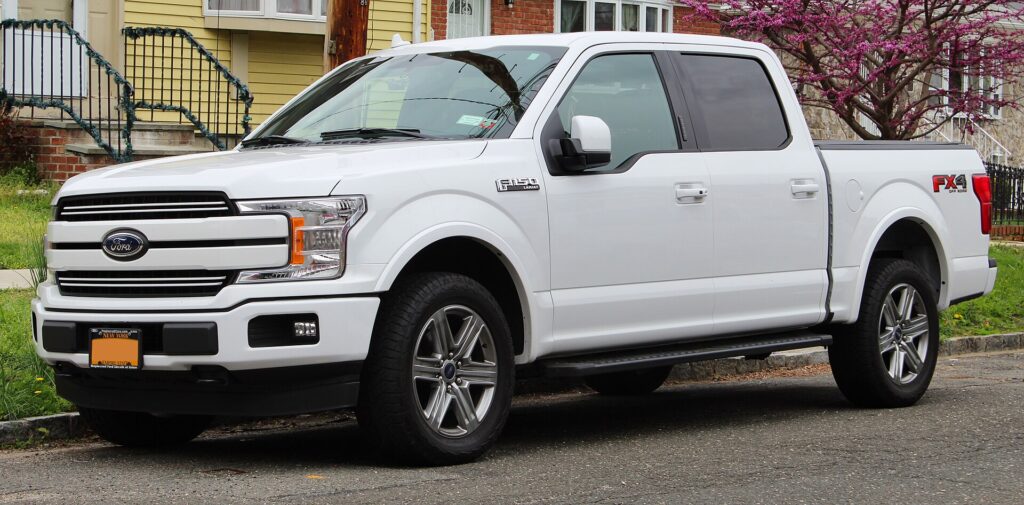
Ford has fended off an attempt to turn complaints about the F-150’s 10-speed automatic into a class action covering more than 200,000 pickups.
The ruling is a clear procedural win for Ford, yet the judge went out of his way to say it settles nothing about whether the 10R80 transmission has a problem. Each of the five owners who brought the case can still pursue his or her own claim, and the order says Ford "would be hard pressed to argue" that the gearbox is free of harsh-shifting trouble given the record in front of the court.
The ruling in O’Connor v. Ford Motor Co. came on September 14 from Judge Jeffrey I. Cummings, a federal judge in Illinois, and the case drew fresh attention this week when Pickup Truck + SUV Talk published a close reading of the order. The owners then asked the Seventh Circuit to hear an immediate appeal, and on November 2 that court said no, according to Ford’s outside counsel, Kasowitz. Fourteen owners filed the original complaint hoping to speak for buyers across the country, but dismissals and withdrawals had shrunk the fight to four states, namely New York, Massachusetts, Illinois and California, by the time the judge ruled.
Even those four states add up to a lot of trucks. California alone accounted for 94,629 of them by the owners’ count, followed by New York at 51,159, Illinois at 43,355 and Massachusetts at 19,496, for 208,639 in all. Across the whole country, an expert hired by Ford counted 1,568,351 non-Raptor F-150s from those years built with the 10R80.
Why the Judge Said No
The court split the owners’ claims in two. The warranty claims fell to a single line in the fine print. The booklet that gives these trucks 60,000 miles or five years of powertrain coverage also bars owners from pressing warranty disputes "as a class representative." The owners did not argue that the waiver was unconscionable, and the judge held that Ford had raised it in time.
For the fraud and consumer-protection claims, the question was whether every truck in the proposed classes shared one defect with one cause. The owners said it did, pointing to internal seals that cannot hold the pressure the transmission needs, and their engineering expert argued that vibration lets fluid get past them. The judge was not persuaded that this explained the trucks as a group.
Part of the reason lay in Ford’s development history. Ford’s engineers originally specified interlocking seals they called Z-Lock, and the order recounts that tests in December 2015 showed those seals leaking too much in severe cold, which raised calibration worries. Ford replaced them with solid seals well ahead of the gearbox’s November 2016 launch, and the engineer who led that work testified that the new parts leaked "virtually zero" in testing. Because no truck in the classes carried the Z-Lock seals, the judge held that documents about them could not prove a common defect.
The ten technical service bulletins Ford issued for harsh shifting cut both ways. Judge Cummings agreed that complaints were what prompted most of them, but each applied to only a slice of the trucks, and between them they pointed at software in the engine and transmission computers, a shift calibration that struggled to adapt as parts wore in, sticky valves and a clutch sleeve that could creep out of place. A list of different culprits, in his view, is the opposite of a single defect.
What It Means for F-150 Owners
The 10R80 arrived as a big step for Ford. Ford’s engineers started on it in 2011, and before it reached customers the company says it had logged over four million miles of testing and run more than 800 computer simulations of the design. It also quotes a Ford document noting that ten gears meant 90 possible shifts against 30 for the outgoing six-speed 6R80, a 360% jump in clutch transitions.
For owners of these trucks, the practical result is that there is no class settlement coming from this case. The service bulletins remain the route to a repair at the dealer. The order leaves the five named owners free to press their individual claims, and it told both sides to meet and plan the next steps in the case.
The Ford Insider Take
Ford won the fight it needed to win, because a class of more than 200,000 trucks is a very different exposure from five individual lawsuits. But the most memorable line in the order is the judge’s warning that the ruling is no clean bill of health, and ten service bulletins back him up. Anyone shopping a used 2017 to 2020 F-150 with the 10-speed should drive it cold, ask whether the bulletin work has been done and treat a harsh shift as a bargaining point rather than a quirk.
More on the F-150
Related

A 13-Year-Old Raptor That Has Barely Left the Driveway Is Up for Auction
A first-generation Ford Raptor that has covered only about 8,000 miles since 2013 has come up for auction in California, where bidding stood at $25,000 on Saturday with…

A Former Officer With PTSD Found Quiet at the Wheel of a Raptor R
A former police officer who lives with post-traumatic stress disorder says a road trip to the Arizona desert in a Ford F-150 Raptor R gave him a mental…

Brazil Gets the Electrified Bronco America Can’t Buy
Ford will put a range-extended Bronco on sale in Brazil in the second half of 2027, the first electrified version of the Bronco and a model that is…