Ford Is Racing to Decide What Suzuki’s Old Thai Plant Will Build
Ford Thailand is speeding up a study into a bigger investment in Rayong, where it bought Suzuki's former factory earlier this year.
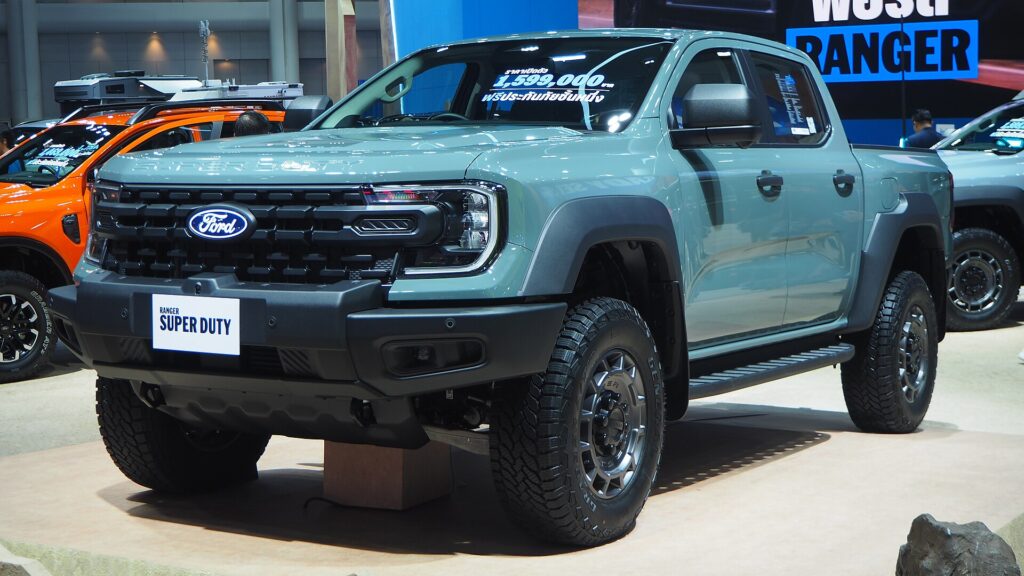
Ford Thailand is speeding up a study into a bigger investment in Rayong, where it bought Suzuki’s former factory earlier this year. The push follows high-level talks with the Thai government about its plan to strengthen the country’s auto industry and supply chains.
The company has not said what the plant will build or how much it will spend. Its managing director said the investment figures cannot be disclosed yet and will depend on how upcoming discussions with the government turn out.
Ratthakarn Jutasen, managing director of Ford Thailand, told the Bangkok Post that Ford remains committed to expanding in Thailand after recent talks with Industry Minister Varawut Silpa-archa. "Ford has operated in Thailand for 30 years and will continue to expand its investments, in line with our parent company’s policy in the United States to position Thailand as a key regional automotive production and export hub in Asean," he said. He added that the Thai government is holding ongoing meetings with individual automakers.
The plant at the center of the study is the former Suzuki factory, a deal Ford signed in January 2026. The site covers 412.5 rai, roughly 163 acres, with 65,000 square meters of factory buildings, and its main attraction is its position next door to Ford Thailand Manufacturing (FTM) inside a free zone. Ratthakarn said the purchase underlines Ford’s commitment to the country as the company marks 30 years of operations there, with cumulative investment of more than 133 billion baht over three decades.
Ford already runs two plants in Thailand, FTM and AutoAlliance Thailand (AAT), with a combined capacity of 190,000 vehicles a year as of 2025. Ninety percent of that output is exported and 10 percent stays in the domestic market, which makes Thailand one of the main sources of Ford pickups and SUVs for markets outside North America.
Home sales are a smaller and shrinking part of the picture. Ford Thailand is targeting 15,000 vehicle sales this year, down from 18,271 in 2025. Ford expects Thailand’s total vehicle market to reach 695,000 units in 2026, with pickup sales falling 4% to 140,000 and pickup-based passenger vehicles holding steady at 40,000, and it pointed to the economic slowdown and buyers moving toward electric vehicles as reasons the pickup market has weakened.
For US buyers the effect is indirect. The Ranger sold in the United States is built at Michigan Assembly Plant in Wayne, Michigan, so any expansion in Rayong would add capacity for the export markets Thailand serves rather than for American showrooms.
The Ford Insider Take
The telling detail is that Ford bought the building first and is only now working out what goes inside it, with the answer tied to what the Thai government offers. That is a negotiation, and Ford is holding a 163-acre bargaining chip right next to FTM. With Ford’s affordable international pickup due next year and Chinese brands squeezing the budget end of the truck market across Southeast Asia, a free-zone site beside FTM looks like the obvious place to build whatever Ford needs to fight back.
Related

Ford Wants Your Car to Flash a Warning When the Weather Blinds It
A newly published Ford patent application describes a car that uses its exterior lamps to warn other drivers when bad weather has left its own lights or sensors…
Ford Made the Big-Battery Mach-E the Cheap One
Every 2027 Ford Mustang Mach-E now comes with the extended-range battery, and the cheapest version, a Select with rear-wheel drive, starts at $39,995 before a $2,045 destination charge.
Ford F-150 Deals for November 2026: Leases From $499 a Month
Ford is offering the 2026 Ford F-150 STX on a lease from $499 a month and financing from 0% for 60 months on the 2026 Ford F-150 this…